Cost Optimisation in CNC Laser Cutting: 5 Effective Methods
Cost Optimisation in CNC Laser Cutting: 5 Effective Methods
Cnc laser cutting cost: quick summary
CNC laser cutting cost: nesting efficiency, cutting parameters, gas and consumable choice, scrap control and cycle-time gains – 5 proven methods.
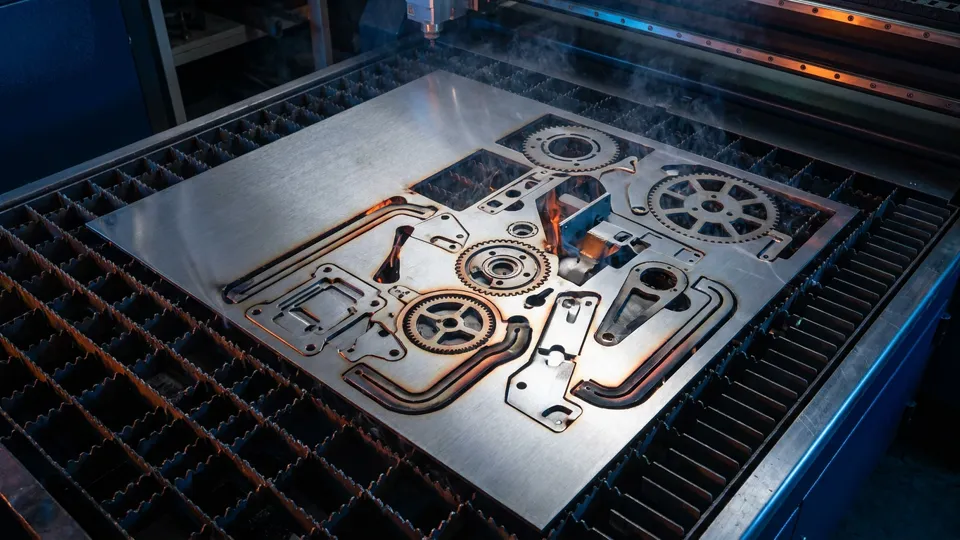
CNC laser cutting optimisation is one of the most effective ways to reduce costs and increase efficiency in sheet metal production. Laser cutting is the first and most cost-intensive step of sheet metal manufacturing. When the right optimisation techniques are applied, material scrap, cutting time and energy consumption can be reduced significantly. In this article we take a detailed look at 5 effective, practical methods for CNC laser cutting optimisation.
1. CNC Laser Cutting Optimisation with Smart Nesting
Nesting is the process of arranging parts on the sheet in the most efficient way possible. With software using a True Shape Nesting algorithm, a material utilisation rate of 85-92% can be achieved even with irregularly shaped parts. Using true shape nesting instead of rectangular nesting alone reduces scrap by 10-15%.
Professional nesting software such as Metalix cncKad and SigmaNEST creates the optimum layout plan using rotation, mirroring and part-in-part algorithms. The minimum distance between parts (web) is usually set to 1-2 times the material thickness. Increasing this distance unnecessarily raises the scrap rate.
The common cut technique cuts the shared edge of two neighbouring parts with a single laser pass. This method reduces both material scrap and cutting time. When common cut is applied, the web distance drops to zero and material savings increase by a further 5-8%. However, the edge quality and tolerance requirements of the parts must allow it.
2. Choosing the Right Material and Thickness
Using unnecessarily thick material increases both material cost and cutting time. Selecting the thinnest material that meets the strength requirements is the fundamental step of a CNC laser cutting optimisation strategy. Every 0.5 mm reduction in material thickness can increase the cutting speed by 15-25%.
For example, using 1.5 mm DC01 steel instead of 2 mm increases the laser cutting speed by around 30% and lowers the material cost by 25%. The combined effect can deliver savings of up to 40% in unit part cost. However, a strength analysis must be carried out before making this decision.
Material quality also affects cutting performance. Surface rust, oil films and protective foil reduce laser cutting quality and slow the process down. Using clean material with a smooth surface directly increases cutting efficiency. Ask your material supplier for a quality certificate and information on the surface condition.
3. Optimising the Cutting Parameters
For every material and thickness combination there is an optimum cutting speed, laser power, assist gas pressure and focal position. Setting these parameters correctly directly affects both cutting quality and production speed.
Cutting too slowly extends the cycle time and widens the heat-affected zone. Cutting too fast causes burr formation, incomplete cuts and degraded edge quality. Start from the machine manufacturer’s cutting parameter tables as a reference and optimise with test cuts.
Fiber laser and CO2 laser machines have different cutting characteristics. For thin sheets (0.5-6 mm) a fiber laser is much faster and more energy-efficient. For thick sheets (over 10 mm) a CO2 laser can be advantageous in terms of edge quality. Choosing the right machine is also part of a CNC laser cutting optimisation strategy.
4. Optimise Your Batch Size
Small batches raise the unit cost because machine setup time is spent every time. Setup operations such as program loading, material positioning, zero-point setting and first-part inspection are repeated on each run regardless of batch size.
Combining parts of similar material and thickness and cutting them in a single run can reduce setup time by 50-70%. Merging parts made of the same material for different customers or projects into a single nesting plan is also an effective method.
The optimum batch size is determined by the balance between setup cost and inventory carrying cost. With the EOQ (Economic Order Quantity) formula you can calculate the optimum order quantity for each part type. At Burak Engineering we provide production planning and cost optimisation consultancy.
5. CNC Laser Cutting Optimisation at the Design Stage
Using laser-cutting-friendly geometries at the design stage directly lowers the production cost. Unnecessarily narrow slots force the laser head to slow down. Very small holes (smaller than the material thickness) require special parameters and reduce speed. Sharp internal corners lead to heat build-up and deformation.
Designing parts to suit standard sheet sizes (1250×2500 mm, 1500×3000 mm) minimises the scrap rate. Keeping part dimensions close to whole fractions of the sheet size increases nesting efficiency. For example, cutting a 620 mm wide part from a 1250 mm wide sheet produces 0.8% scrap, whereas cutting a 630 mm wide part produces 49% scrap.
With the micro-joint technique you can prevent small parts from dropping out of the sheet and shorten the post-cut sorting time. You can learn additional optimisation techniques from the best practice documents of TRUMPF and similar machine manufacturers.
Cost Analysis: The Real Impact of Optimisation
When you apply these five methods together, the total cost saving can reach the 30-50% range. Smart nesting can deliver 10-15% material savings, the right thickness selection 15-25% material and time savings, parameter optimisation 10-15% time savings, batch consolidation 5-10% setup savings and design optimisation a 5-10% overall efficiency gain.
The Metalix cncKad software performs an automatic cost calculation for every nesting plan. The per-part cost is determined including material cost, cutting time, machine hourly rate and scrap rate. This data makes quotation preparation and pricing considerably easier.
Conclusion: Competitive Advantage through CNC Laser Cutting Optimisation
CNC laser cutting optimisation is the most direct way to gain a competitive advantage in sheet metal production. When nesting, material selection, cutting parameters, batch size and design optimisation are applied together, serious cost savings are achieved. Professional software such as Metalix cncKad, SigmaNEST and SolidWorks are indispensable tools in this process.
At Burak Engineering we offer CNC laser cutting optimisation, Metalix programming, nesting consultancy and sheet metal production cost analysis services. Contact us via our contact page to receive a free preliminary assessment for your projects.
Cnc laser cutting cost: checklist
Use this checklist to review the cnc laser cutting cost steps covered on this page:
- 1. CNC Laser Cutting Optimisation with Smart Nesting
- 2. Choosing the Right Material and Thickness
- 3. Optimising the Cutting Parameters
- 4. Optimise Your Batch Size
- 5. CNC Laser Cutting Optimisation at the Design Stage
- Cost Analysis: The Real Impact of Optimisation
- Conclusion: Competitive Advantage through CNC Laser Cutting Optimisation
- Frequently Asked Questions
If you want hands-on support with cnc laser cutting cost, get in touch.
FAQ
Frequently Asked Questions
By how much can total costs be reduced in CNC laser cutting?
When smart nesting, the right material and thickness selection, cutting parameter optimisation, batch consolidation and design optimisation are applied together, the total cost saving can reach the 30-50% range. Smart nesting alone delivers 10-15% material savings, the right thickness selection 15-25% material and time savings, and batch consolidation 5-10% setup savings. Burak Engineering offers production planning and cost optimisation consultancy in this field.
What is nesting and how does it reduce sheet metal scrap?
Nesting is the process of arranging parts on the sheet in the most efficient way possible. Software using a True Shape Nesting algorithm, such as Metalix cncKad and SigmaNEST, can achieve a material utilisation rate of 85-92% even with irregularly shaped parts by using rotation, mirroring and part-in-part placement. Using true shape nesting instead of rectangular nesting alone reduces scrap by 10-15%; the common cut technique increases material savings by a further 5-8%.
How does reducing sheet thickness affect laser cutting cost?
Every 0.5 mm reduction in material thickness can increase the cutting speed by 15-25%. For example, using 1.5 mm DC01 steel instead of 2 mm increases the cutting speed by around 30%, lowers the material cost by 25% and can deliver savings of up to 40% in the unit part cost. Before making this decision, however, a strength analysis must always be carried out and the thinnest material that meets the requirements should be selected.
Should a fiber laser or a CO2 laser be preferred?
For thin sheets of 0.5-6 mm, a fiber laser is much faster and more energy-efficient. For thick sheets over 10 mm, a CO2 laser can be advantageous in terms of edge quality. For every material and thickness combination there is an optimum cutting speed, laser power, assist gas pressure and focal position; these should be optimised through test cuts using the machine manufacturer’s parameter tables as a reference.
How does laser-cutting-friendly part design reduce the scrap rate?
Designing parts to suit standard sheet sizes such as 1250×2500 mm or 1500×3000 mm minimises the scrap rate. For example, cutting a 620 mm wide part from a 1250 mm wide sheet produces 0.8% scrap, whereas cutting a 630 mm wide part produces 49% scrap. Avoiding narrow slots, holes smaller than the material thickness and sharp inner corners also increases cutting speed and quality.